Book appointment
You have successfully booked your appointment
Full Name :
Phone :
Date of appointment:
On December 1, 1964, the Department of Burns was established on the basis of the Department of Field Surgery - Military Medical Institute 103 led by Doctor Le The Trung as the Dean of the Department. The payroll at that time consisted of 18 people, including 03 doctors, 02 medics, 09 nurses and 04 public servants.
The mission of the burn department: treatment, training and scientific research on burns, especially war burns.
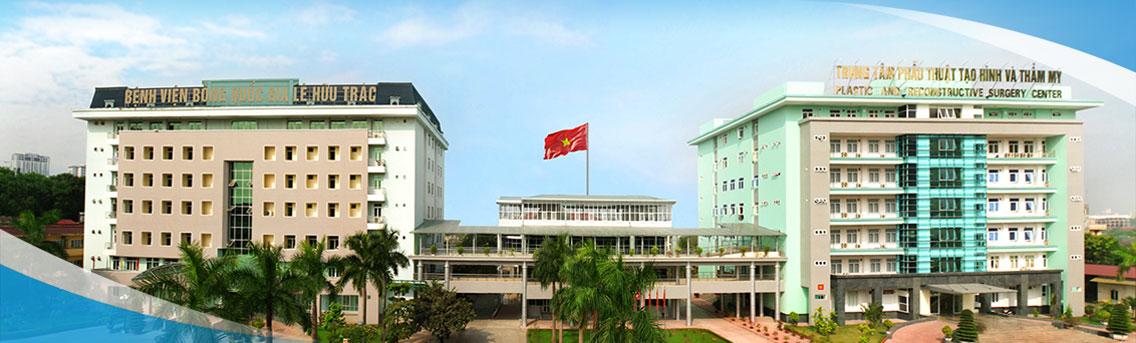
On April 25, 1991, Vice Chairman of the Council of Ministers Nguyen Khanh signed Decision No. 142/CT, establishing the National Institute of Burns named after the great physician Hai Thuong Lan Ong Le Huu Trac, called the Institute of Burn Le for short. Huu Trac was developed on the basis of the Department of Burns (BM3), Military Medical Institute 103. The Institute of Burns is located at 263 Phung Hung Street, Phu La Ward, Ha Dong District, Hanoi City.
It is the leading Institute of Burns for the army and people in the country.
Is one of the two practice hospitals of the Military Medical Academy.
1. General information:
o Full name: Le Huu Trac National Institute of Burns
o Abbreviated name: Le Huu Trac Burn Institute
o English name: Vietnam National Institute of Burns
o Address: 263 Phung Hung Street, Phuc La Ward, Ha Dong District, Hanoi City
o Established April 25, 1991
o Being a unit 2 times Hero of the LLVT
2. Board of Directors:
Assoc. Prof. Dr. Nguyen Gia Tien, Director
Dr. Truong Ngoc Duong, Political Commissar
Assoc. Prof. Dr. Nguyen Ngoc Tuan, Deputy Director
Assoc. Prof. Dr. Nguyen Nhu Lam, Deputy Director
Assoc.Prof.Dr. Tran Ngoc Tuan, Deputy Director
3. Scientific and technical staff:
- 1 Professor
- 5 Associate Professors
- 18 PhDs
- 7 masters
4. Notable achievements:
4.1. Educate:
Well perform the training tasks assigned by the Military Medical Academy: Research Training, Master's Degree, Level I Specialization, Level II Specialization, Long-term Doctor, Junior Doctor, Bachelor of Nursing...
- Guided 15 PhD students to successfully defend their doctoral thesis in Burns, currently 4 PhD students are implementing the topic.
- Trained many Master classes, Level II specialties in Burns.
- Training of Level I, Preliminary Specialist Doctors for provinces and cities.
- Training nurses and technicians on burns for all routes.
4.2. Treatment:
4.2.1. Collecting and treating:
Hospital bed staffing : 360 beds (310 regular, 50 for disaster response).
Bed utilization rate : 90% - 95%
Total number of patients examined : 7,000 patients/year
- New Burns : 5,500 patients/year
- Burn sequelae : 1,500 patients/year
Total number of inpatients: 5,000 patients/year
- New burns : 3,500 patients
- Burn sequelae: 1,000 patients
- Other : 500 BN
Poor patients accounted for : 80% of the total number of patients collected
4.2.2. Some achievements in burn treatment:
- Lower the mortality rate from 7% - 10% to 1.5% - 1.7%.
- Improve the ability to save the life of burn patients:
Save the lives of adult patients with burns up to 90% of total body surface area (DTCT) and burns up to 85% deep.
Save the lives of child patients with burns up to 70% of the total area of the brain and deep burns of up to 63% of the brain.
Save the lives of many burn patients with severe complications such as: sepsis, acute kidney failure, respiratory burns, burns with many severe medical diseases combined...
- Reduce the average hospital stay from 18-21 days to 14-16 days.
4.2.3. Treatment of complex chronic wounds:
- Successfully treated many patients with large, complex soft tissue and skin loss injuries (on average, about 300-350 patients with skin loss each year, complicated soft tissue injuries are transferred to the National Institute of Burns).
- Successfully treated many diseases with long-healing wounds and sores that are difficult to heal due to radiation (cancer treatment), diabetes, arteritis, spinal cord paralysis, pressure, HIV-infected patients, wounds caused by snake bites, ulcers caused by old scars...
4.2.4. Some achievements in plastic surgery, plastic surgery and rehabilitation after burns:
- Successfully treated many cases of severe, complicated and long-term sequelae of burns.
- Develop many treatment techniques such as: WK skin graft scar removal, flap transfer, Expander, microsurgery and super thin skin flap...
- In addition to burn sequelae, it also successfully treats sequelae due to trauma, birth defects...
- Combining plastic surgery - plastic surgery with rehabilitation treatment. Improve the number of patients receiving rehabilitation treatment and the quality of rehabilitation treatment with burn patients.
Reduce treatment days and treatment costs.
4.2.5. New and modern diagnostic and treatment techniques have been successfully applied:
- Technique to diagnose burn depth by laser dopler device.
- Techniques for early diagnosis of bacteria, antibiogram by blood culture system, automatic identification of bacteria.
- Necrosis excision technique - skin grafting within the first 72 hours after the burn.
- Ultrafiltration technique in the treatment of bacterial infection, burn toxicity, acute renal failure in burns.
- Early enteral nutrition technique through nasogastric tube in the treatment of severe burns patients.
- Technique of bronchoscopy, gastroduodenal use by flexible tube in diagnosis and treatment of respiratory burns, gastrointestinal bleeding in severe burns.
- Technique of skin grafting with mesh pieces, micro pieces, 2 layers in the treatment of large and deep burns.
- Techniques of fibroblast culture, fibroblast plate creation, treatment of burn patients, keratinocyte culture.
- Techniques for obtaining, processing, preserving and using pig skin, frog skin, and all skin types used in the treatment of burns.
- The technique of using liquefied gas bed system to treat patients with severe burns.
- The technique of using hyperbaric oxygen to support patients with burns and burn sequelae.
- Stretching techniques, ultra-thin skin flaps and microsurgery in plastic and cosmetic surgery treatment of patients with burn sequelae.
4.2.6. Combining 2 medical backgrounds in burn treatment at the National Institute of Burns:
- One of the strengths of the National Park in recent years is the use of traditional medicine in the treatment of burn wounds (B76, Maduxin, Selaphin, Dampomad, Eupolin, ...)
- Currently, about 70% of patients treated at the Institute use traditional medicine researched and produced by the National Archives and National Parks.
Traditional medicine has a good effect in the treatment of burns and war wounds.
4.2.7. First aid and treatment of victims of fire and explosion disasters
- Mobile teams are ready to participate in emergency, transport and treatment of victims of fire and explosion disasters.
- Participated in emergency, transportation and effective treatment of hundreds of victims of fire and explosion disasters in recent years (Dai Bai - Bac Ninh; Nui Thanh - Quang Nam, Quang Ninh ...)
- Guiding and advising the grassroots levels on the organization of rescue, first aid, first aid, and transportation of victims of fire and explosion disasters.
4.3. Scientific research:
- State-level projects: 03 have been successfully accepted; 11 in progress; 01 preparation for acceptance; 01 starts to deploy; 02 State-level Protocols; 01 Experimental production project is underway.
- State-level branch project (branch): 02 (excellent acceptance test).
- Project at Ministry of Health: 07 (accepted, 04 achieved Excellent).
- Ministry of National Defense Project: 04 (03 has been accepted, 01 is excellent, 02 is good).
- Many topics at university level
- Hospital level project: every year there are 15-20.
Most of the topics have great practical value, are thoroughly applied in treatment to bring many benefits to patients.
- 3 topics won VIFOTEC prizes.
- 7 topics won prizes at the Young Scientific and Creative Conferences of the National Universities of Medicine and Pharmacy.
- 10 winning techniques at the Youth Technical and Creative Sports Festivals in the Capital Health sector.
- 4 winning topics at the annual Military Science and Technology Sports Festivals.
- 4 innovative innovations won Academy awards.
5. Building a strong and clean Party Committee in association with building a credit VM unit:
The Party Committee and branches regularly meet TSVM standards, 99% of Party members are qualified for level I. The unit has achieved the title of VM.
6. Achievements and rewards

+ Two times awarded the title of Hero of the People's Armed Forces:
- Hero of the People's Armed Forces 1989 (Burn Department - Burn Department, Hospital 103)
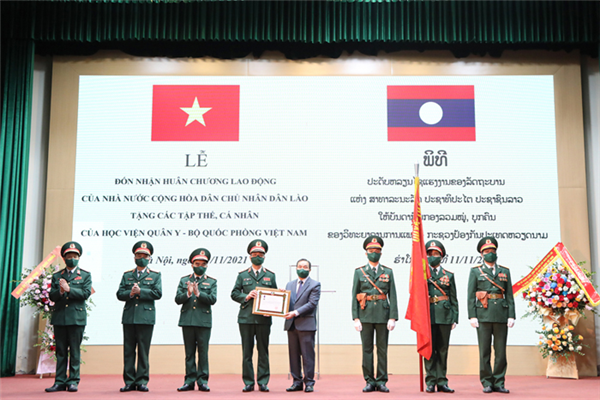
- Hero Hero of the People's Armed Forces in the renovation period 2007 (Le Huu Trac Institute of Burns).
+ Third-class Military Merit Medal 1995
+ First Class Victory Medal in 1979
+ First Class Victory Medal in 1996
+ Second Class Victory Medal in 1979
+ Second Class Victory Medal in 1981
+ Third-class Victory Medal in 2002
+ First Class Labor Medal in 2004
+ Bonus flag of the Prime Minister in 2004
+ Certificate of Merit from the Government for performing the first liver transplant in 2004
+ Certificate of Merit from the Ministry of National Defense: 2003, 2004, 2007
+ Certificate of Merit from the Ministry of Health: 1992, 1994, 1995, 1997, 2004, 2005
+ Bonus flags of Vietnam Medical Union: 2004, 2005, 2006, 2007
+ Certificate of Merit from the Ministry of Higher Education and Training in 1984
+ Comprehensive Hospital of Excellence: 2006, 2007, 2008; 2009
+ Government bonus flag: 2009
+ As one of 10 friendly hospitals out of 917 hospitals in the country.